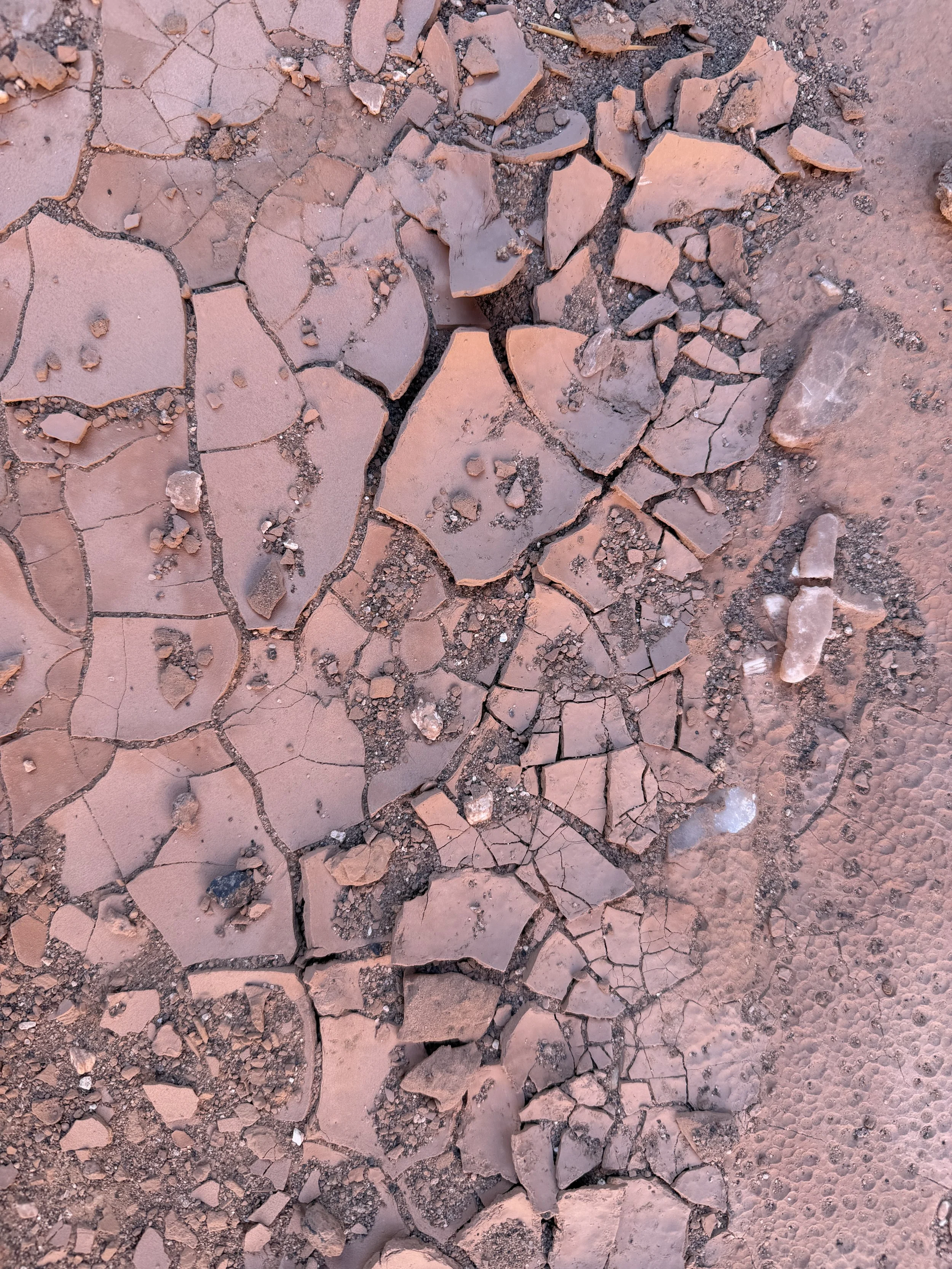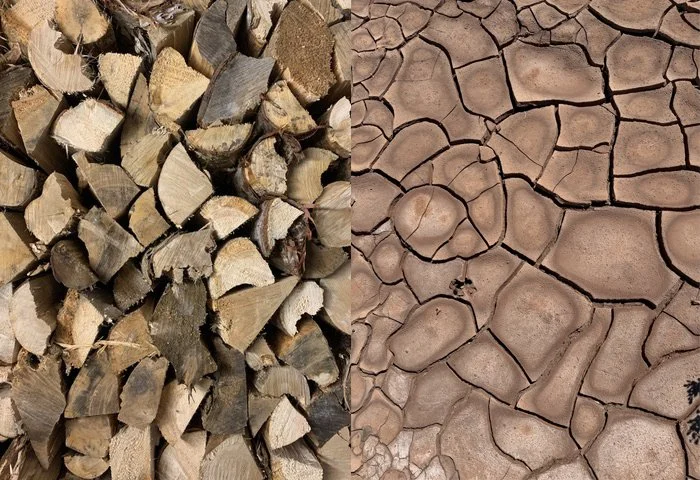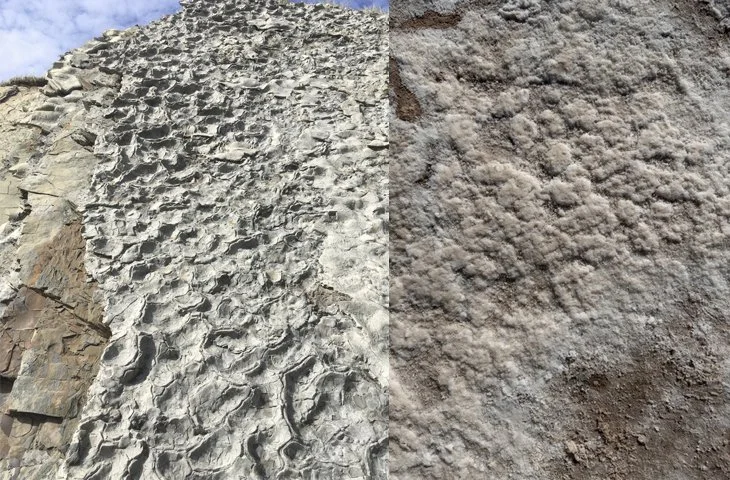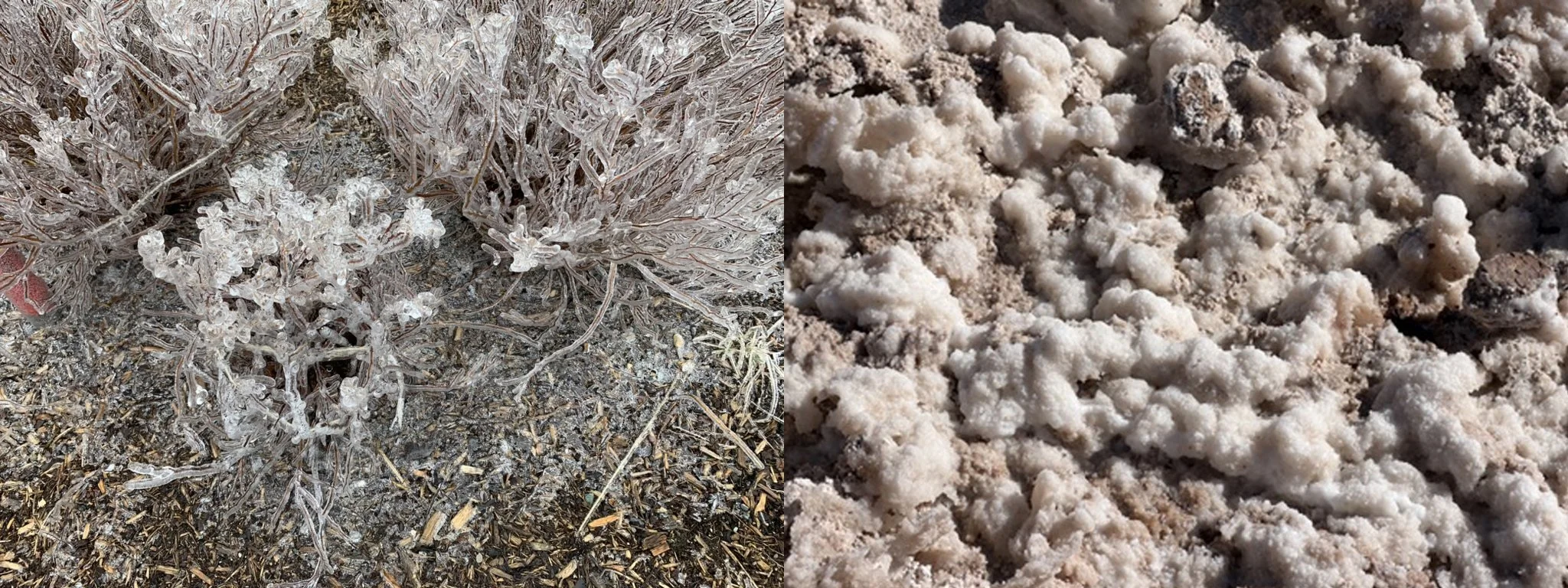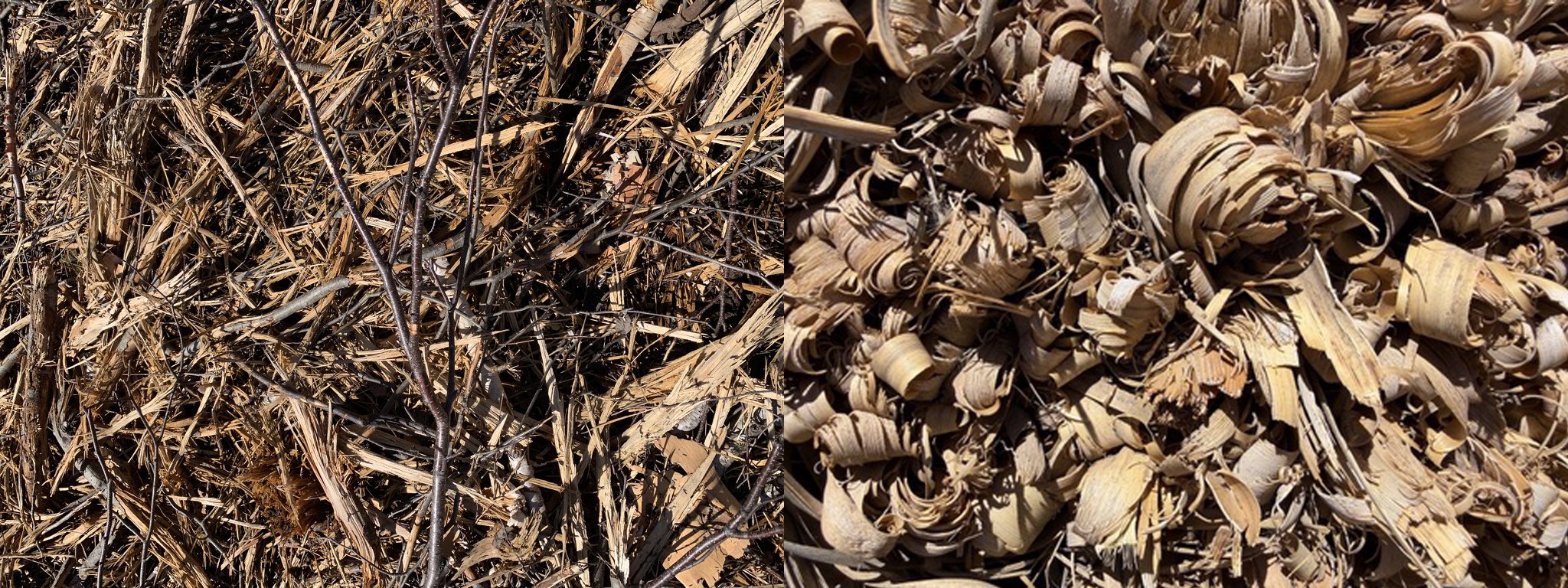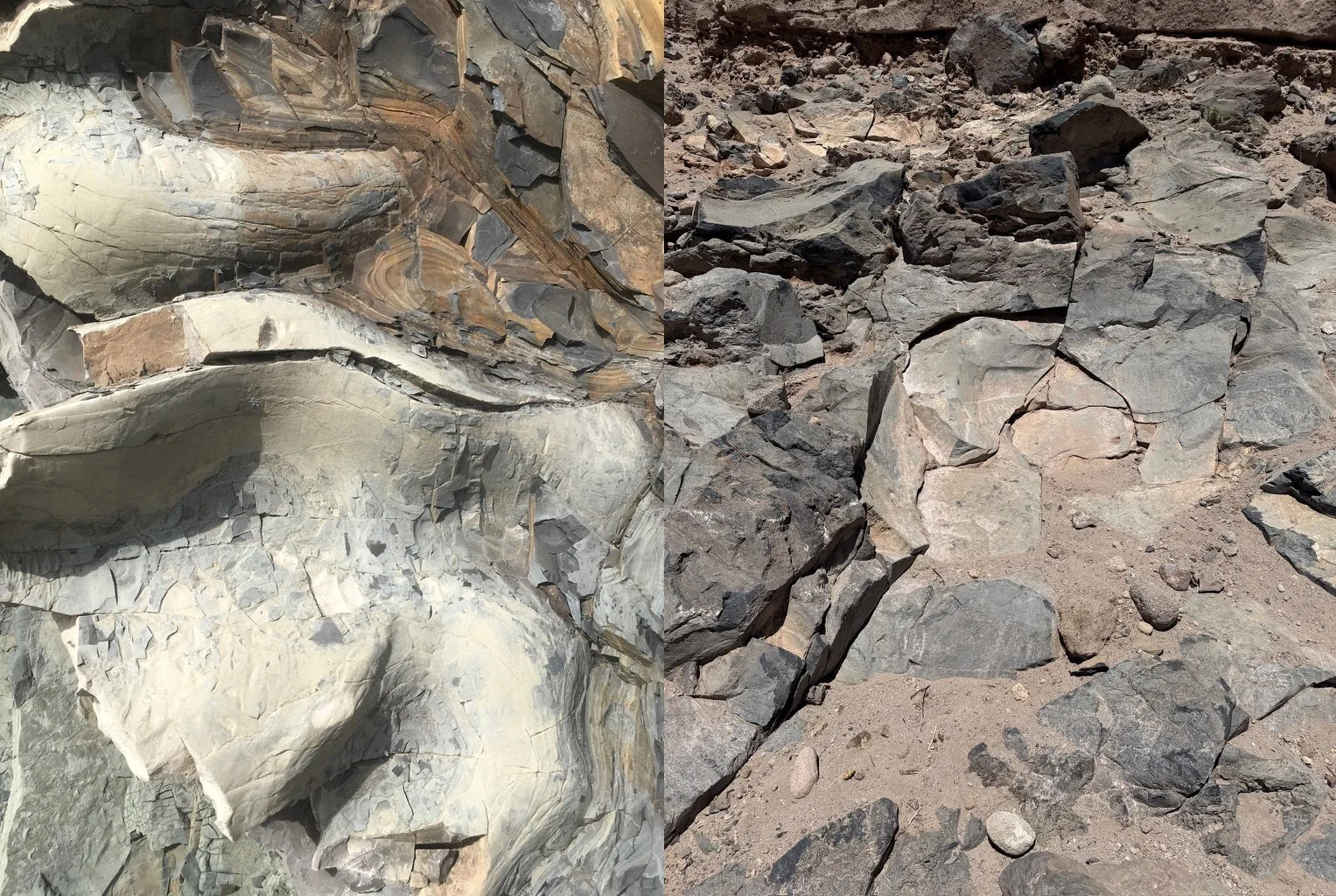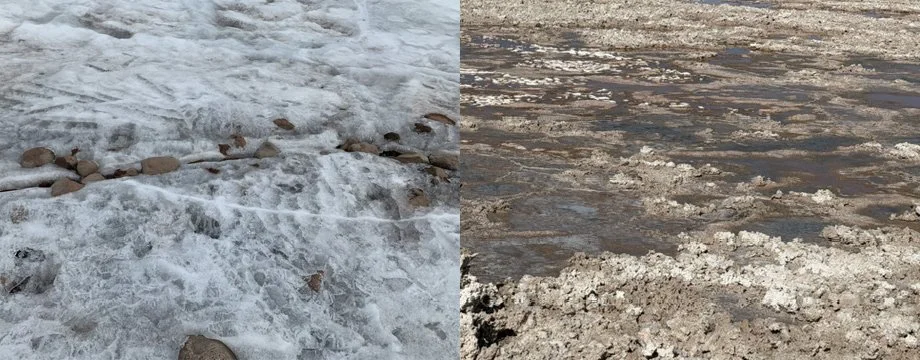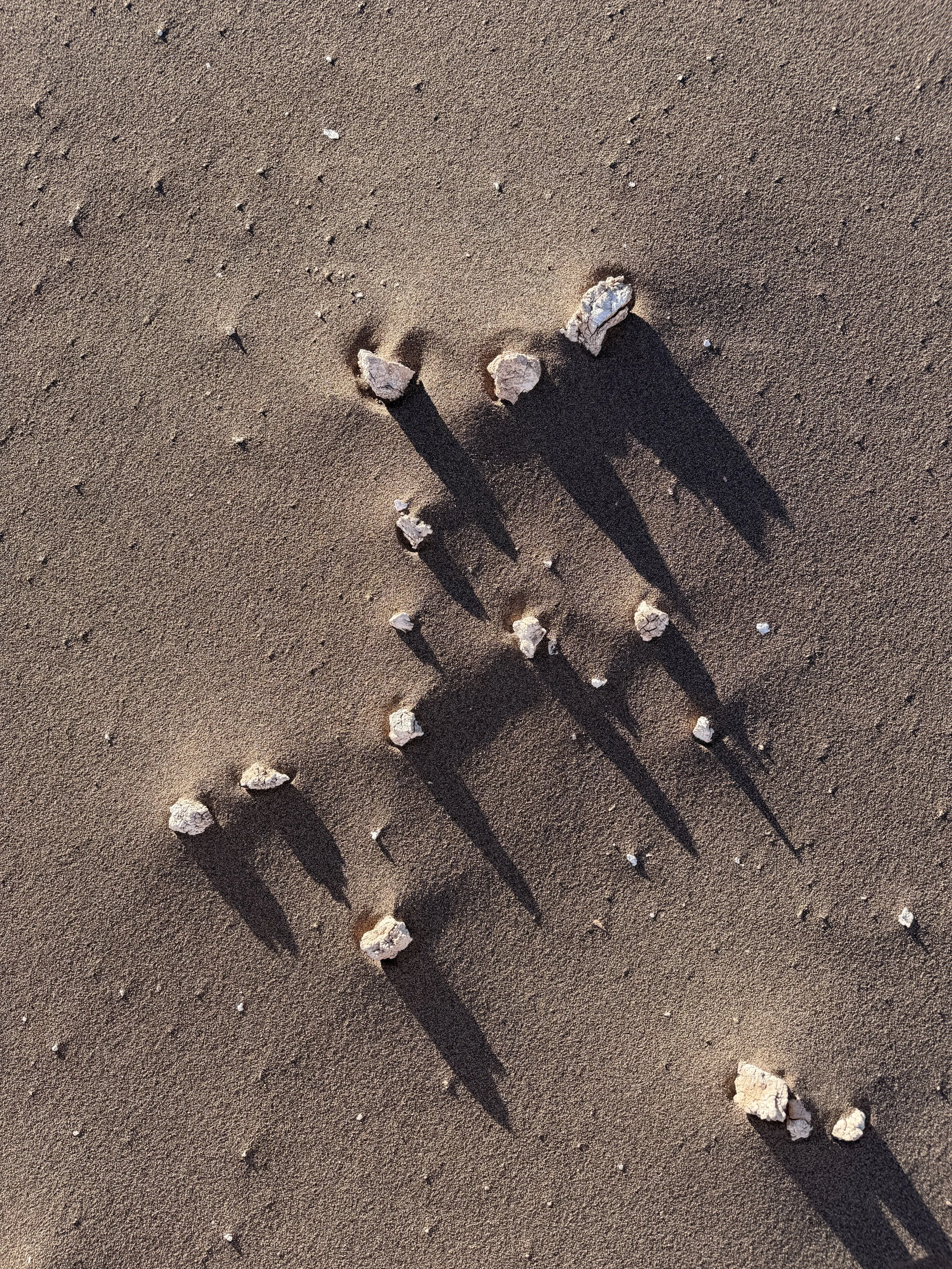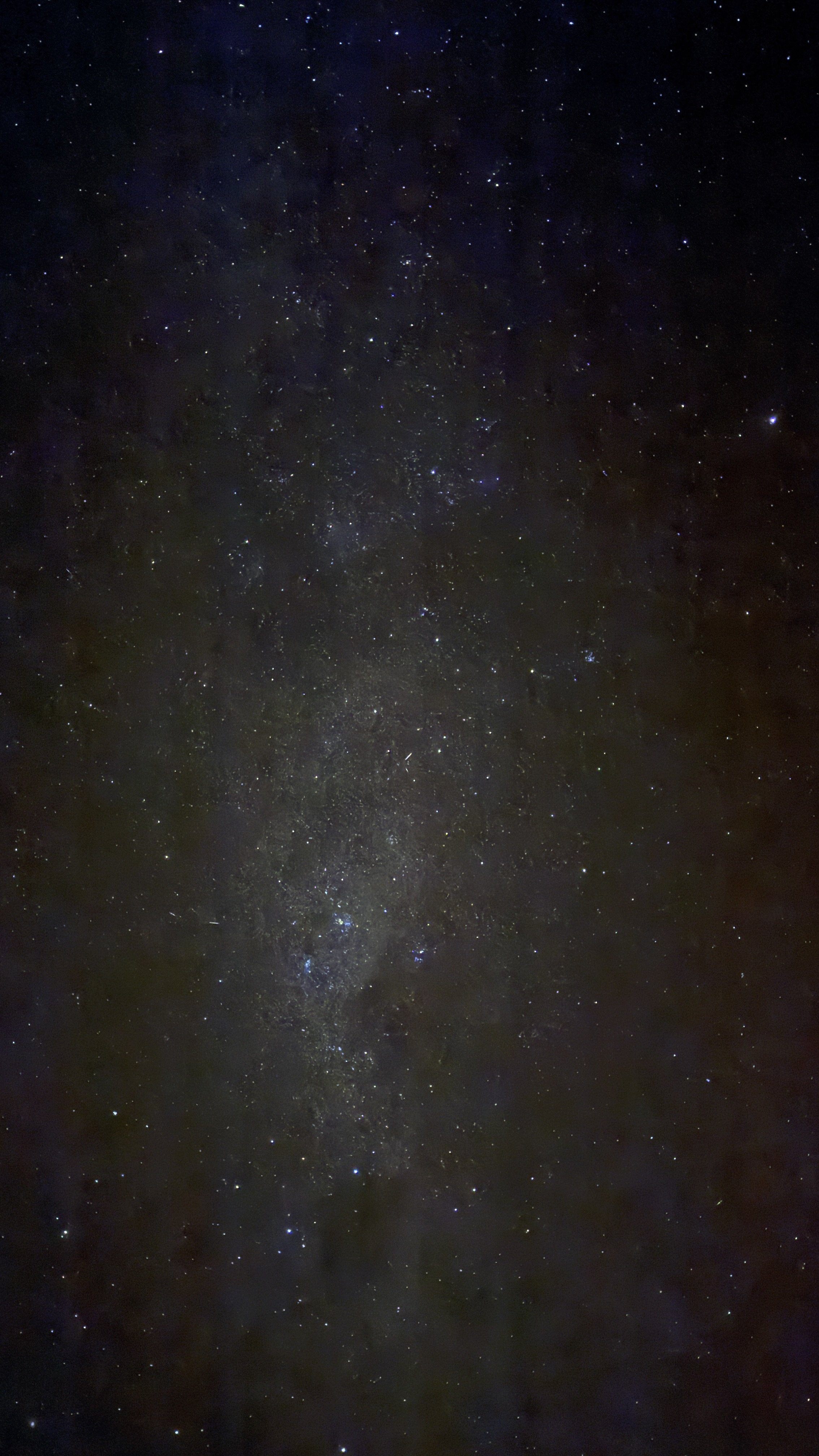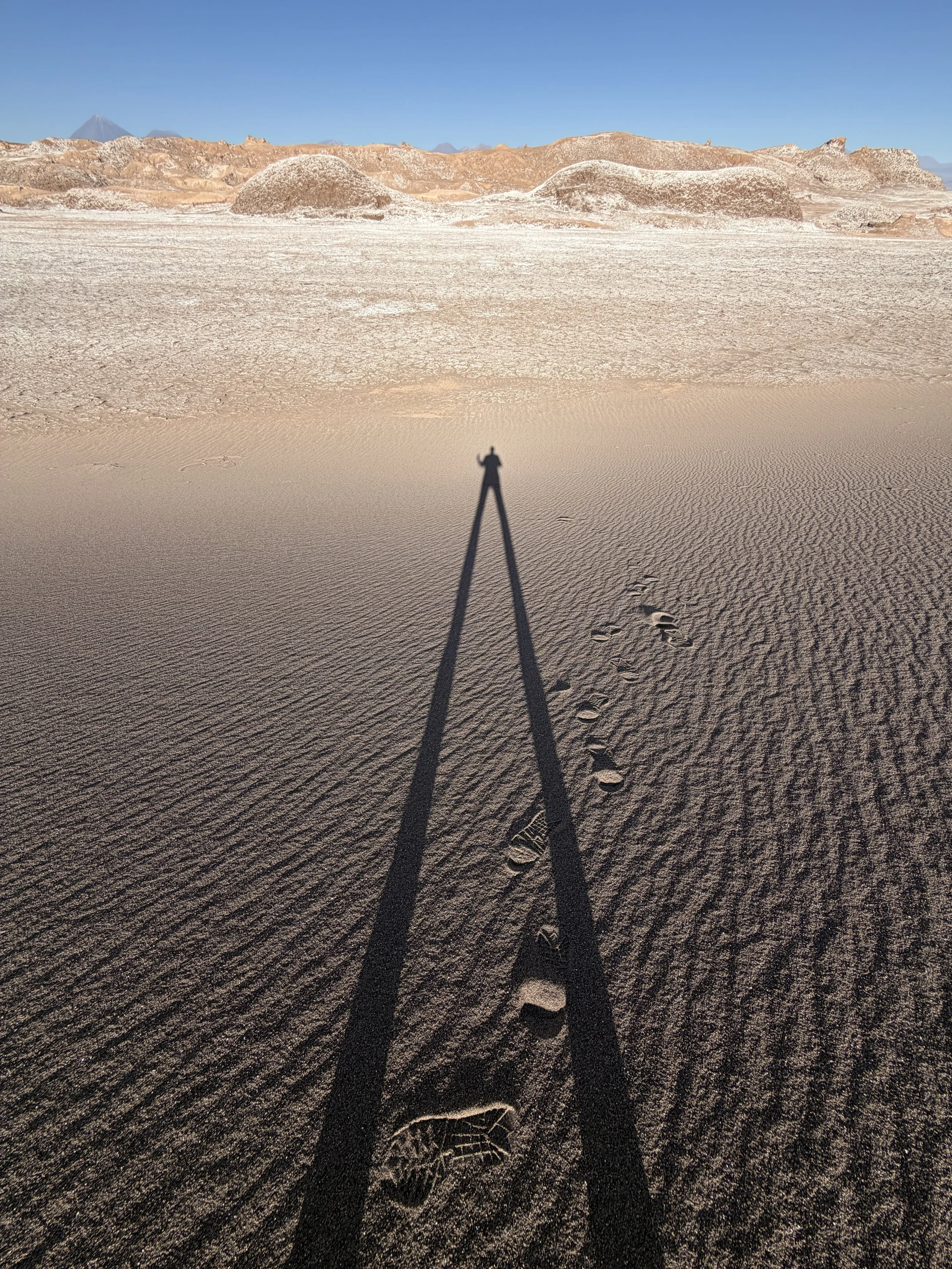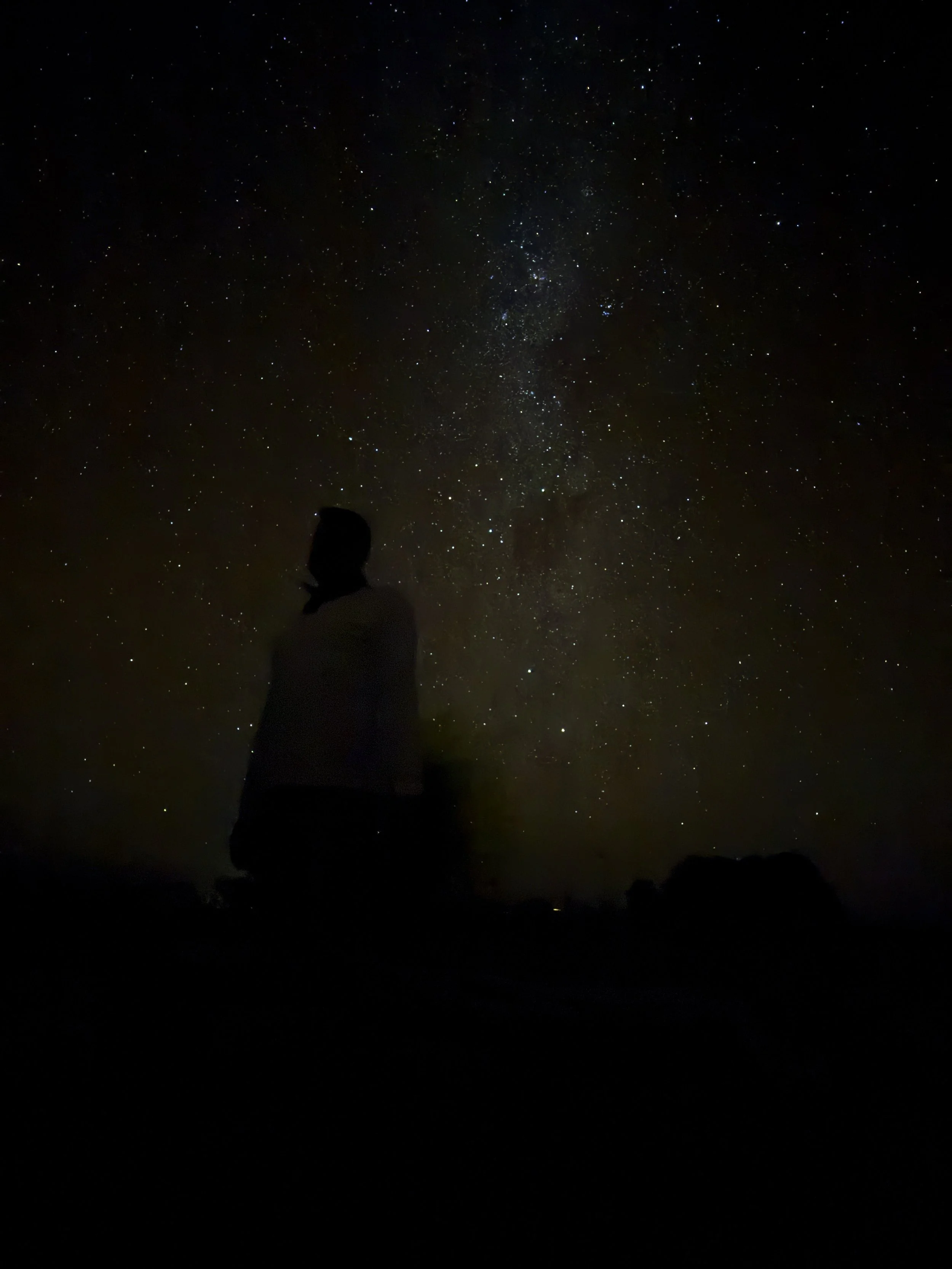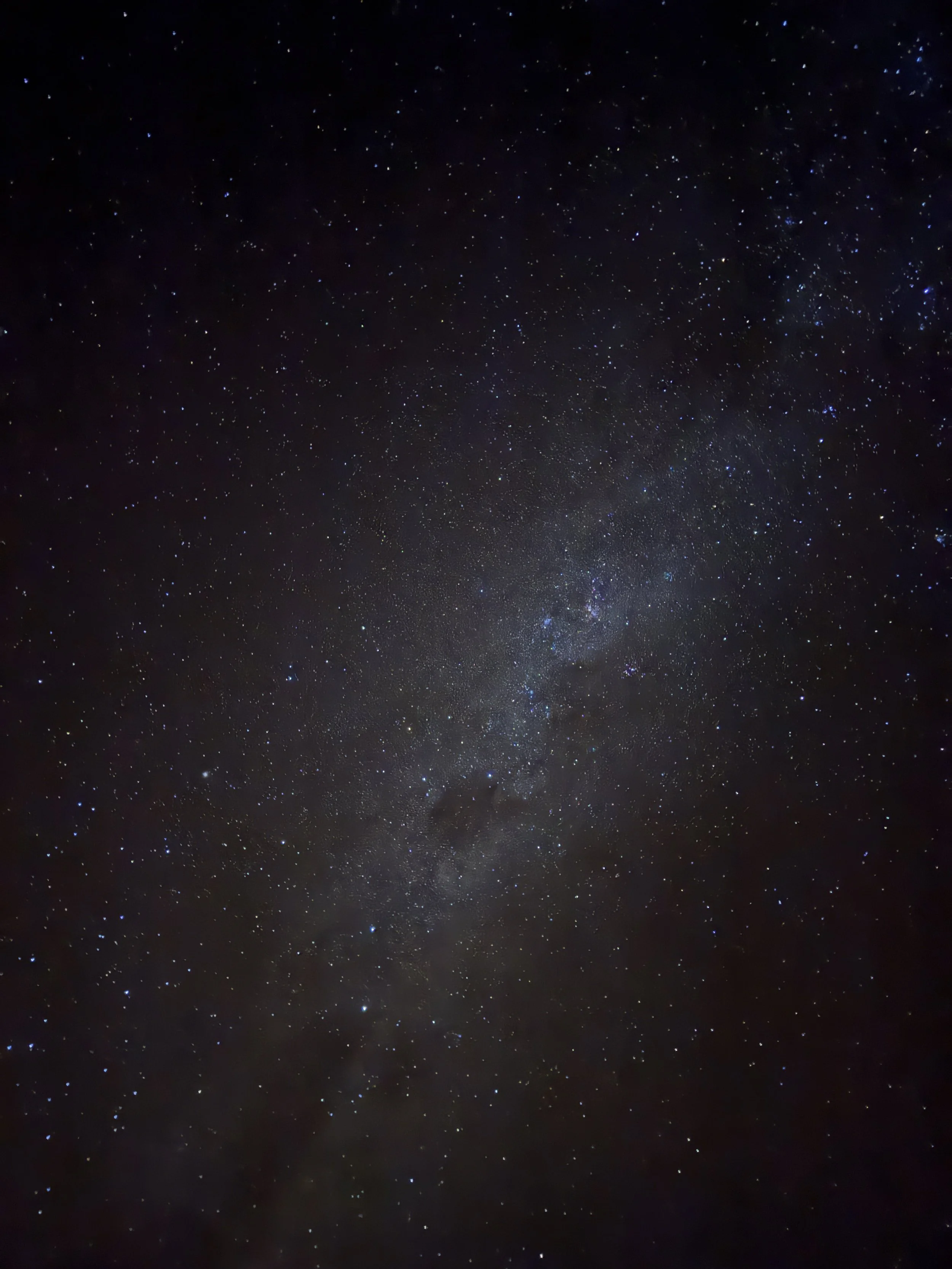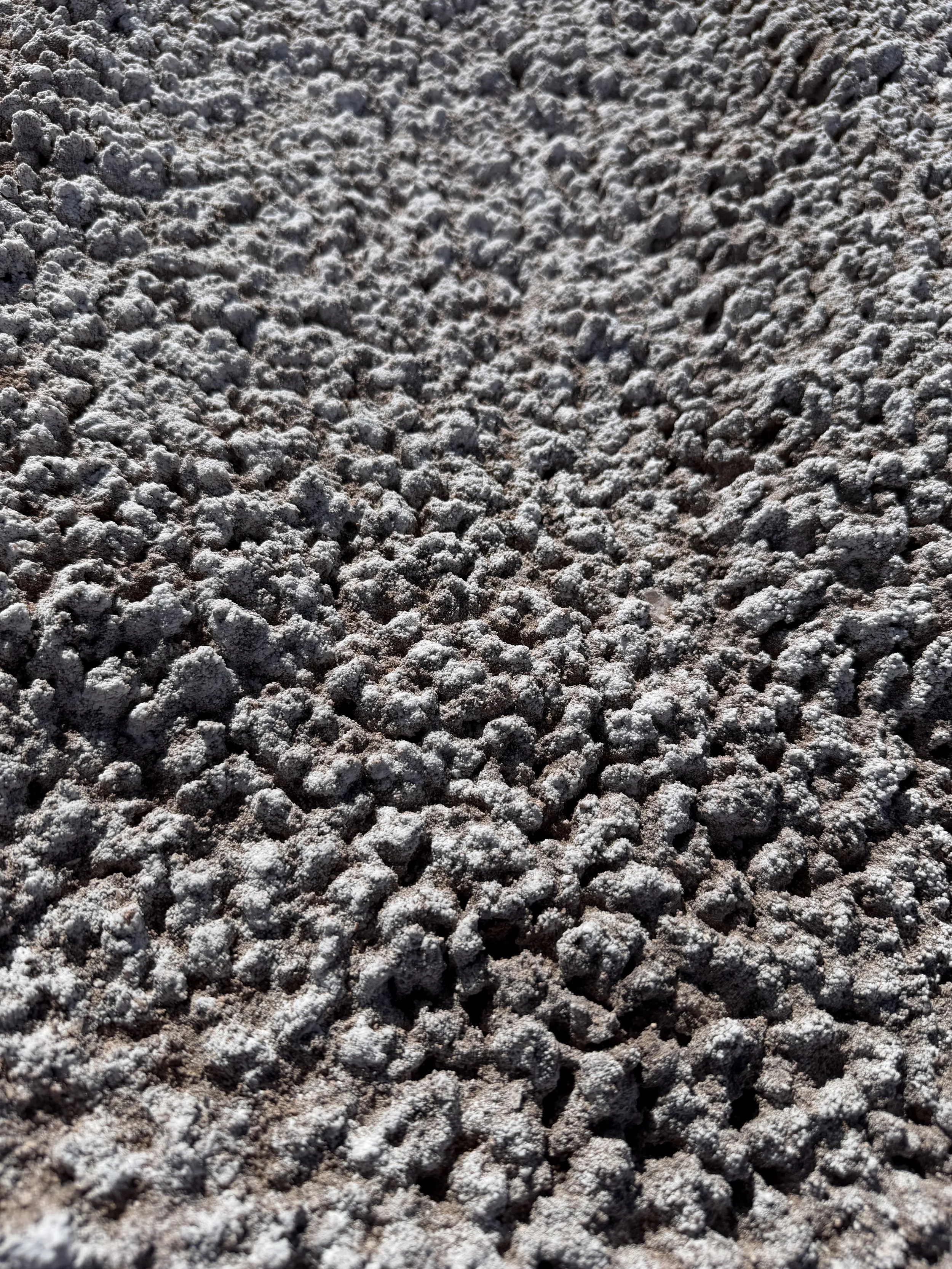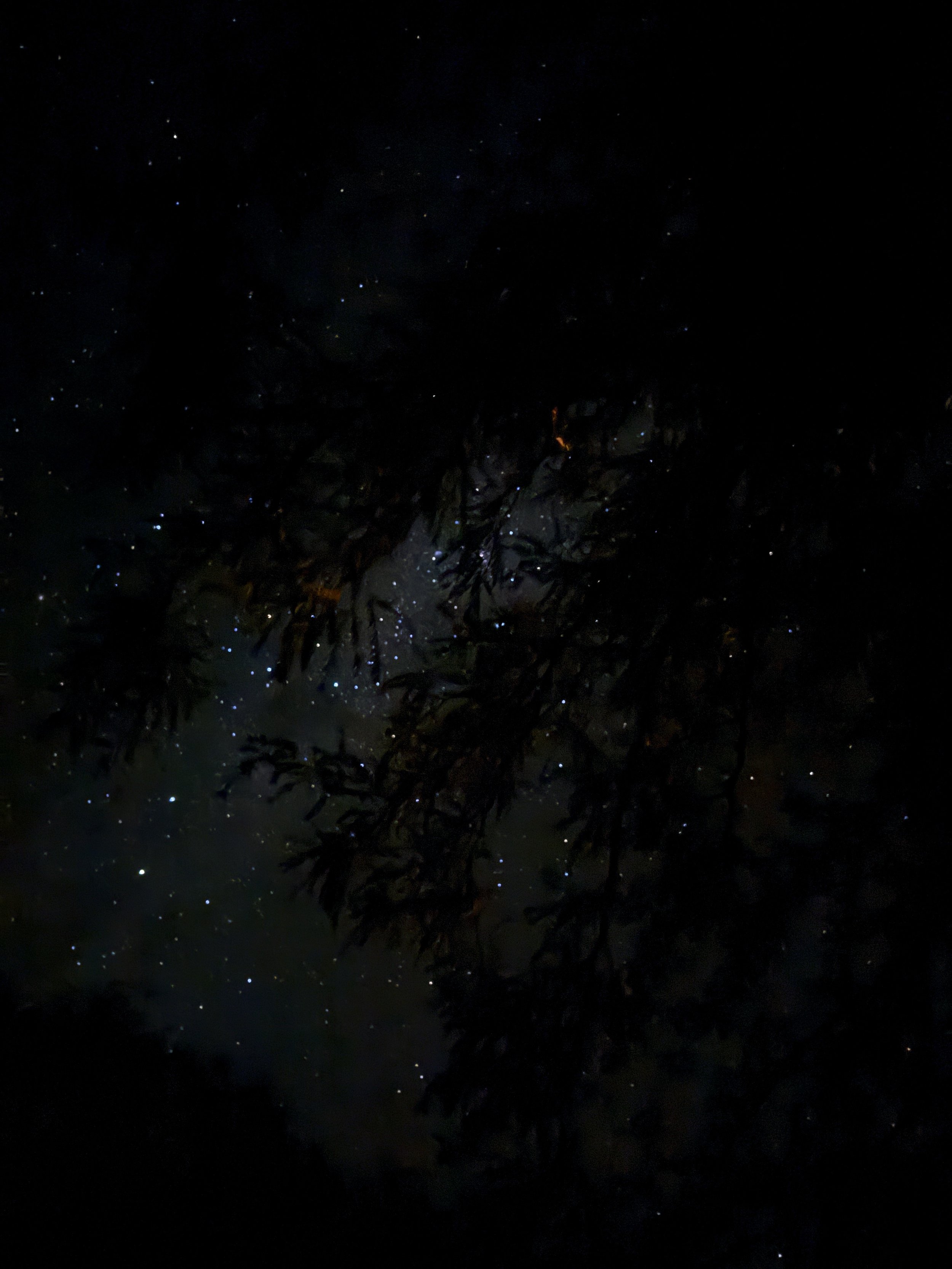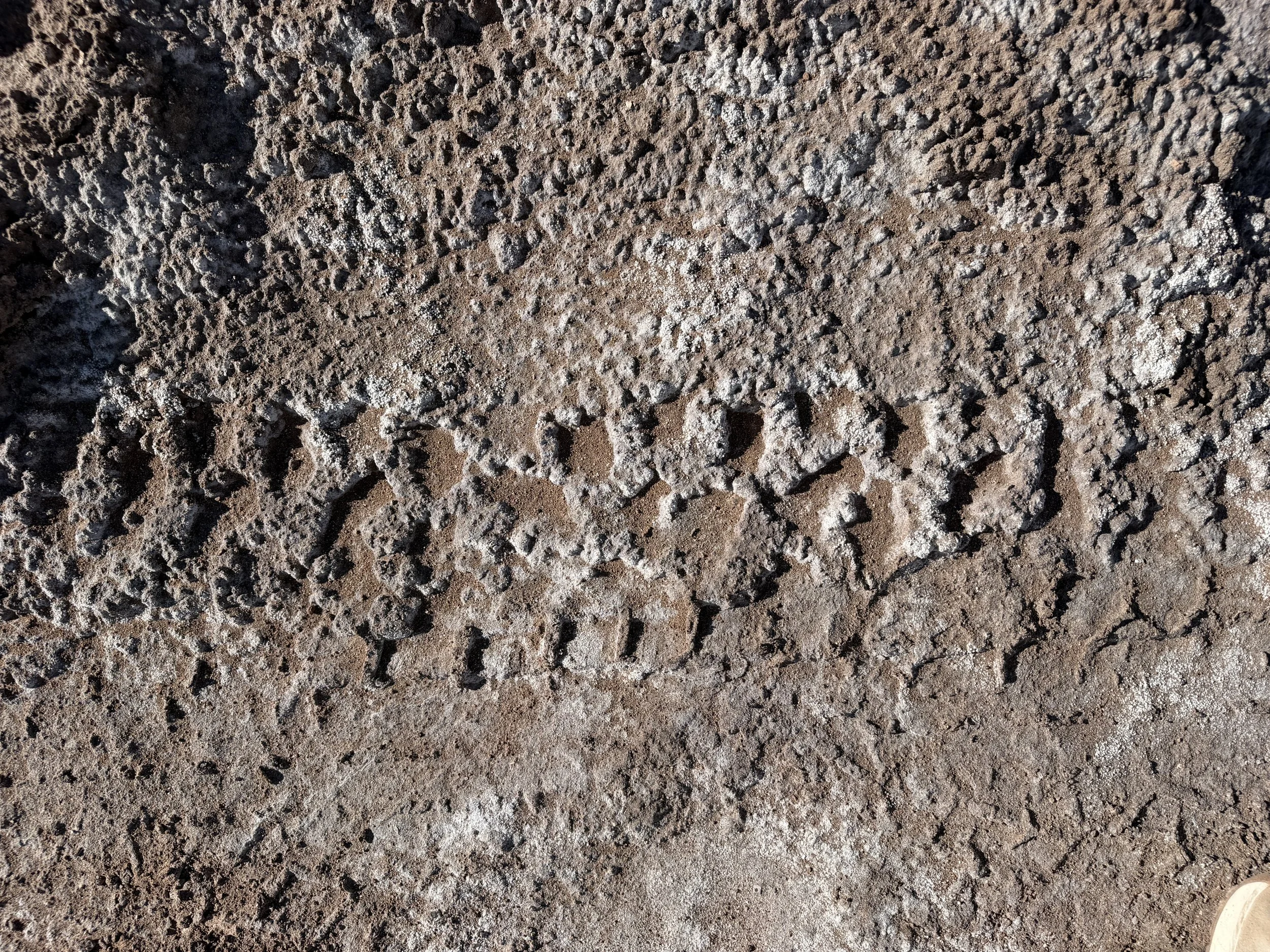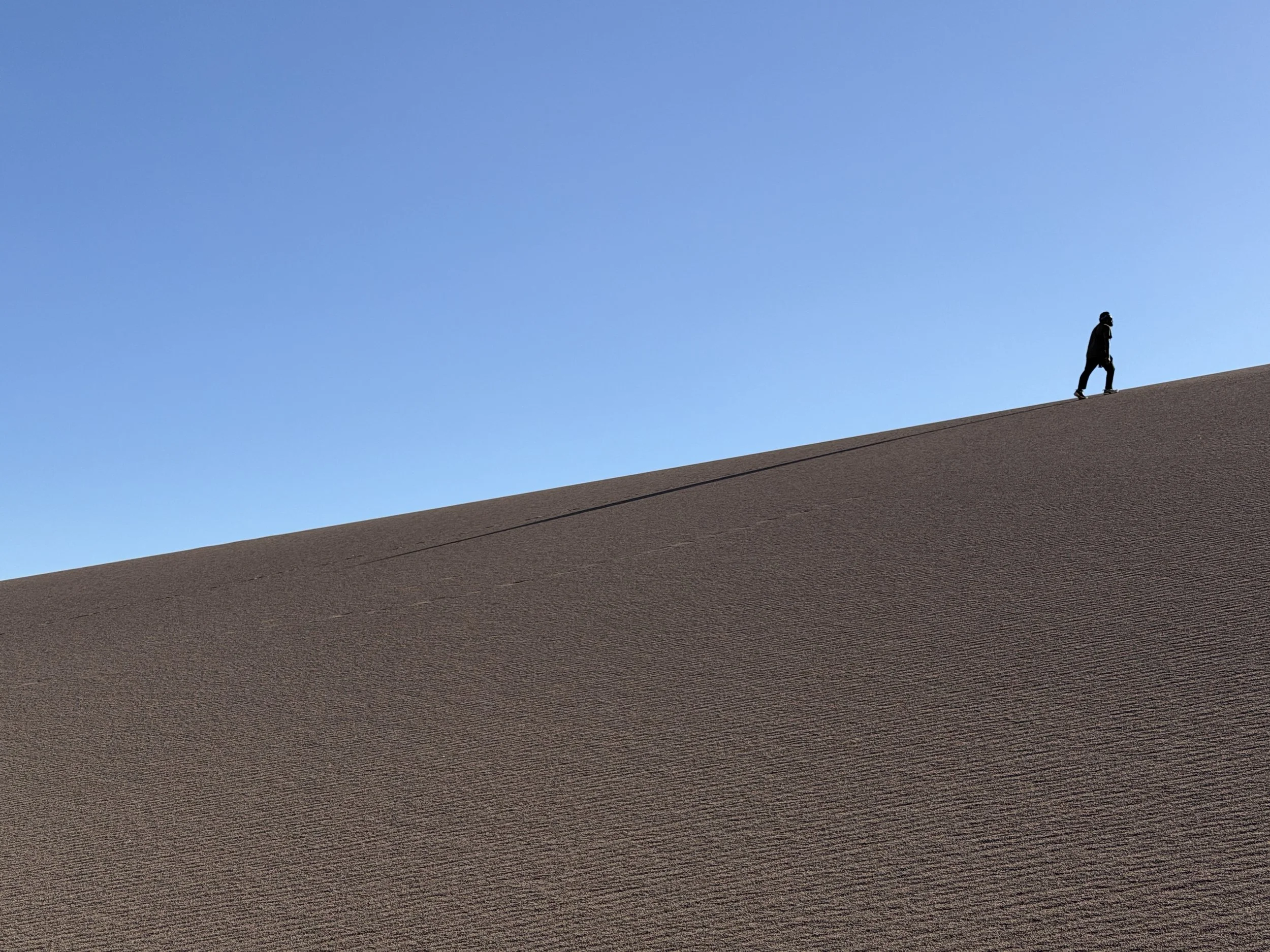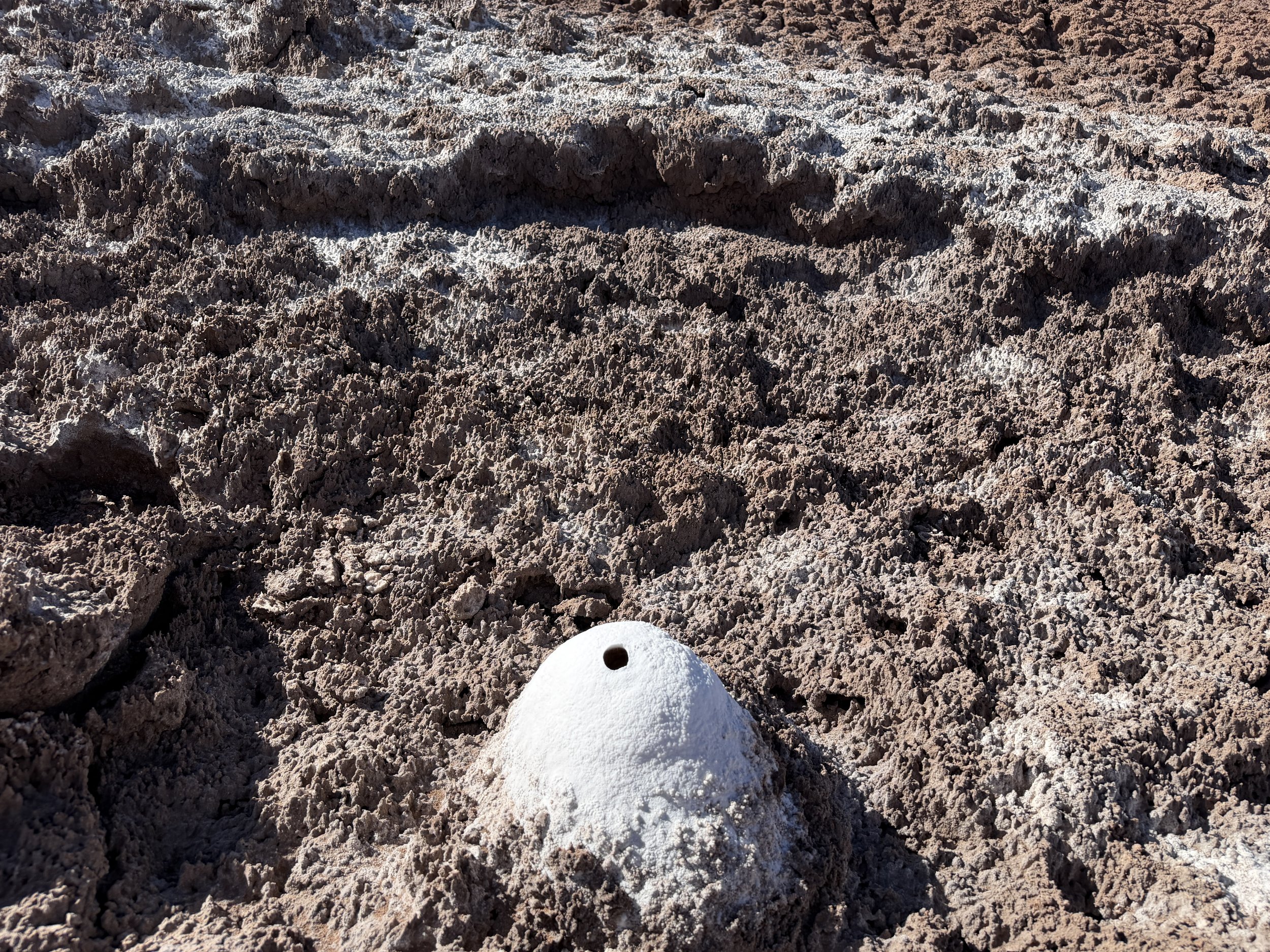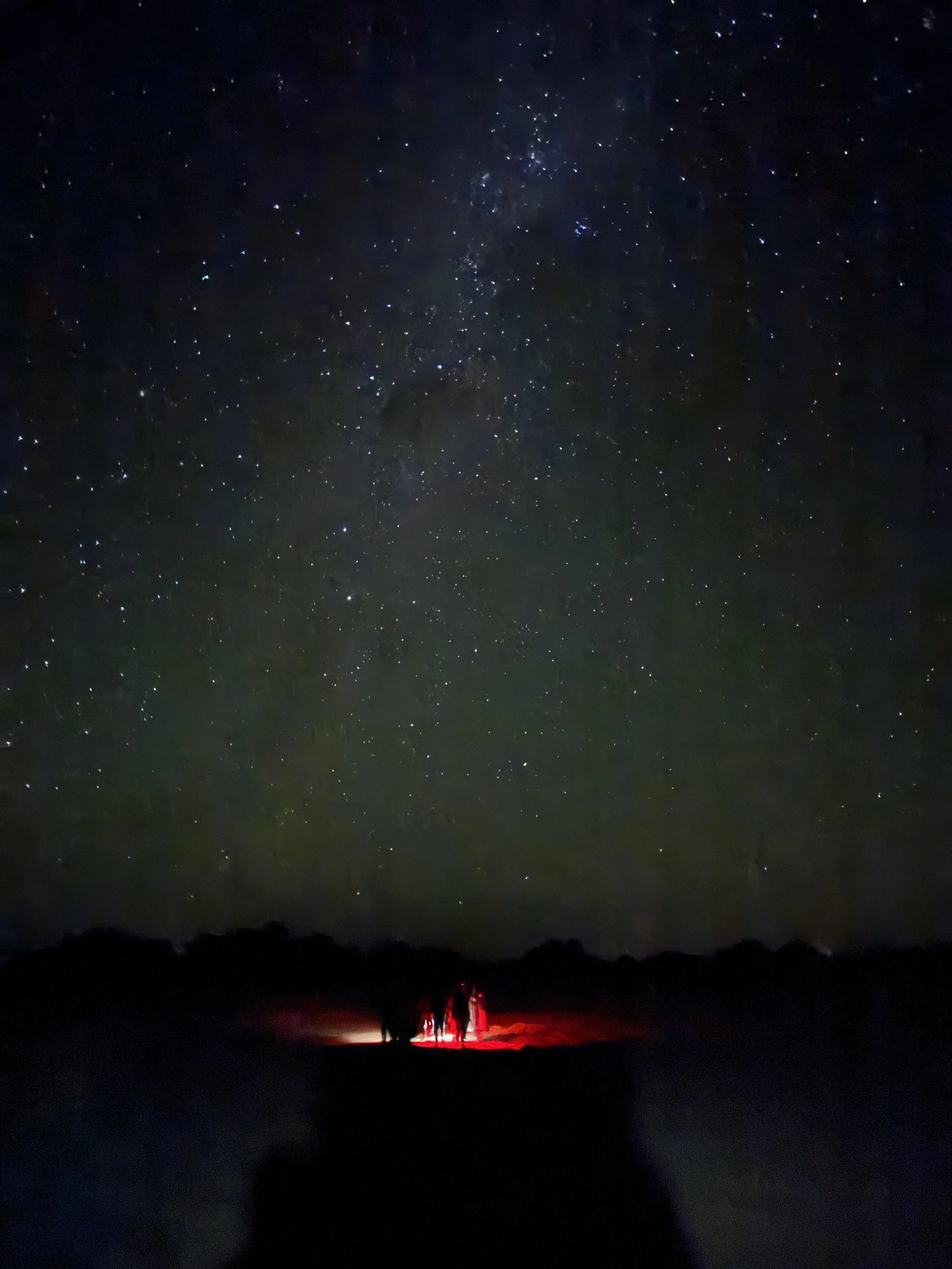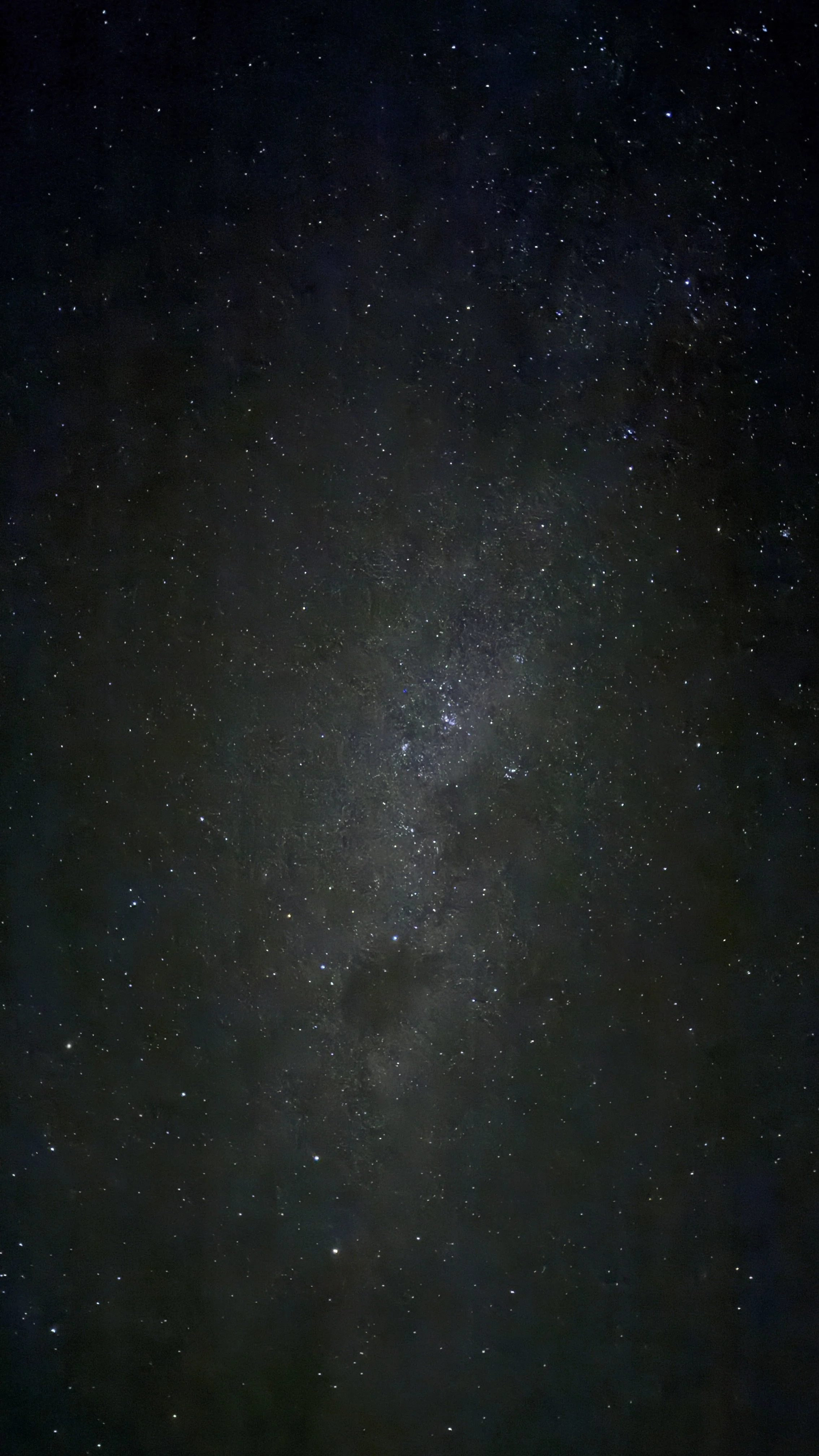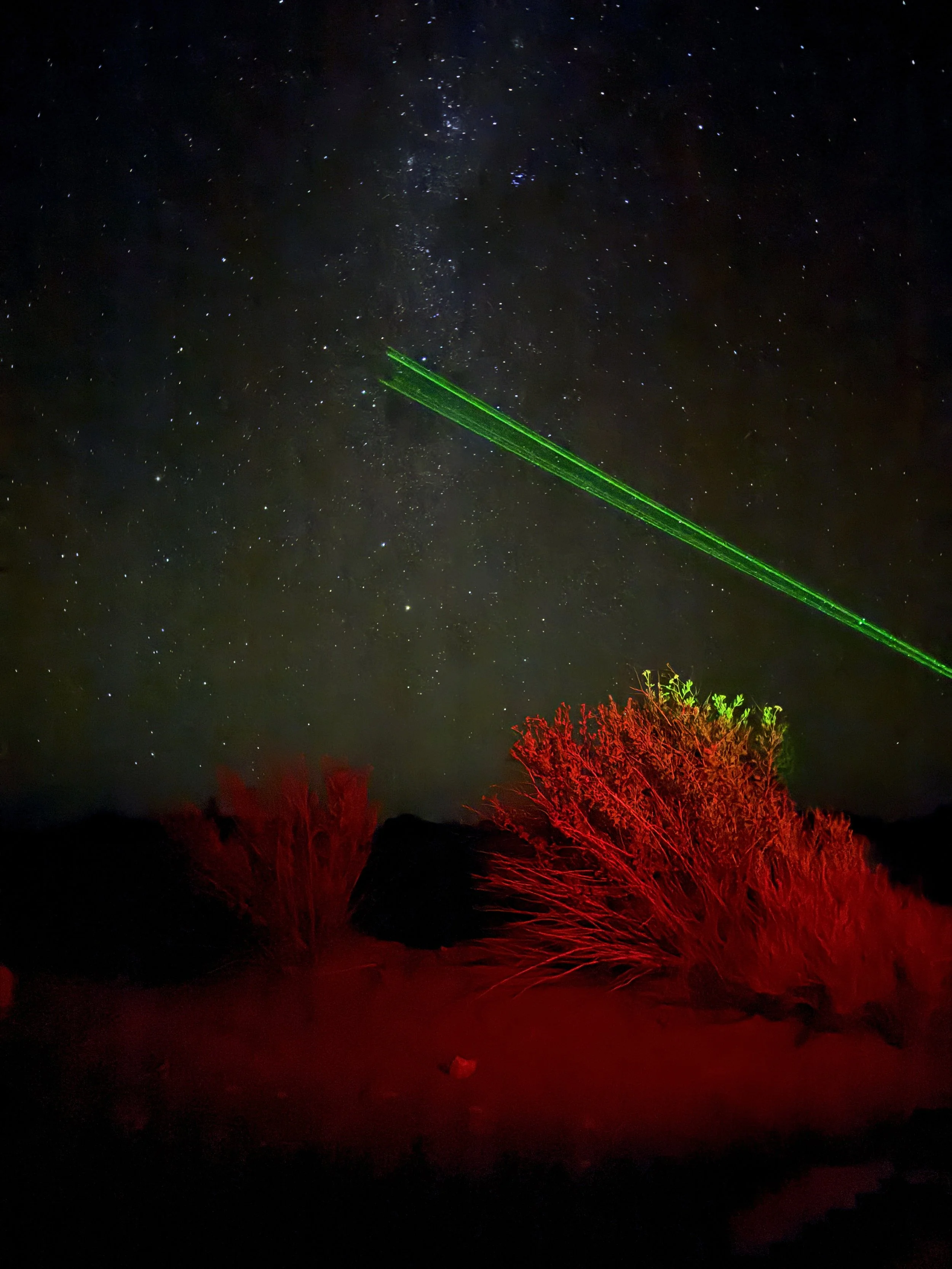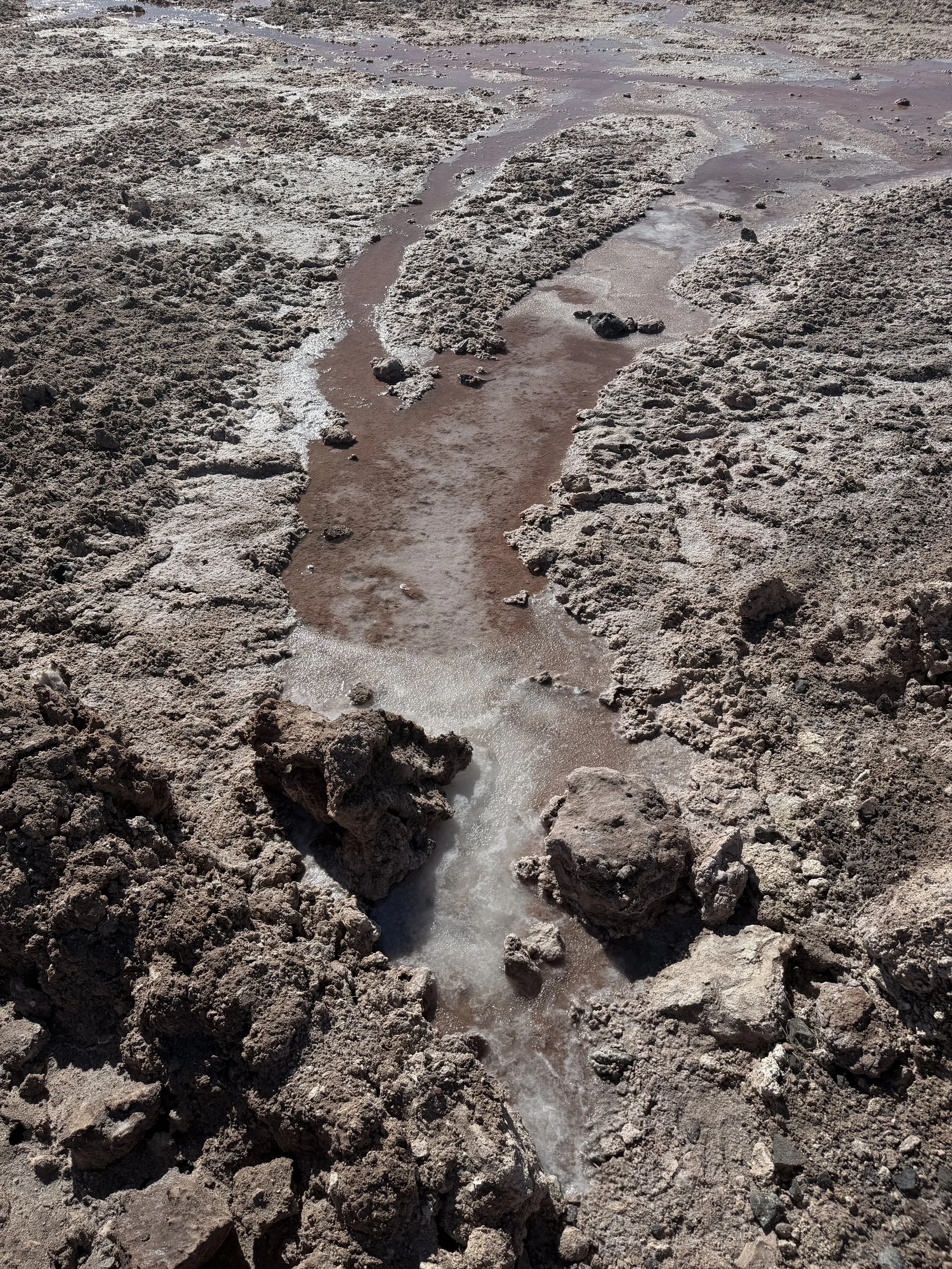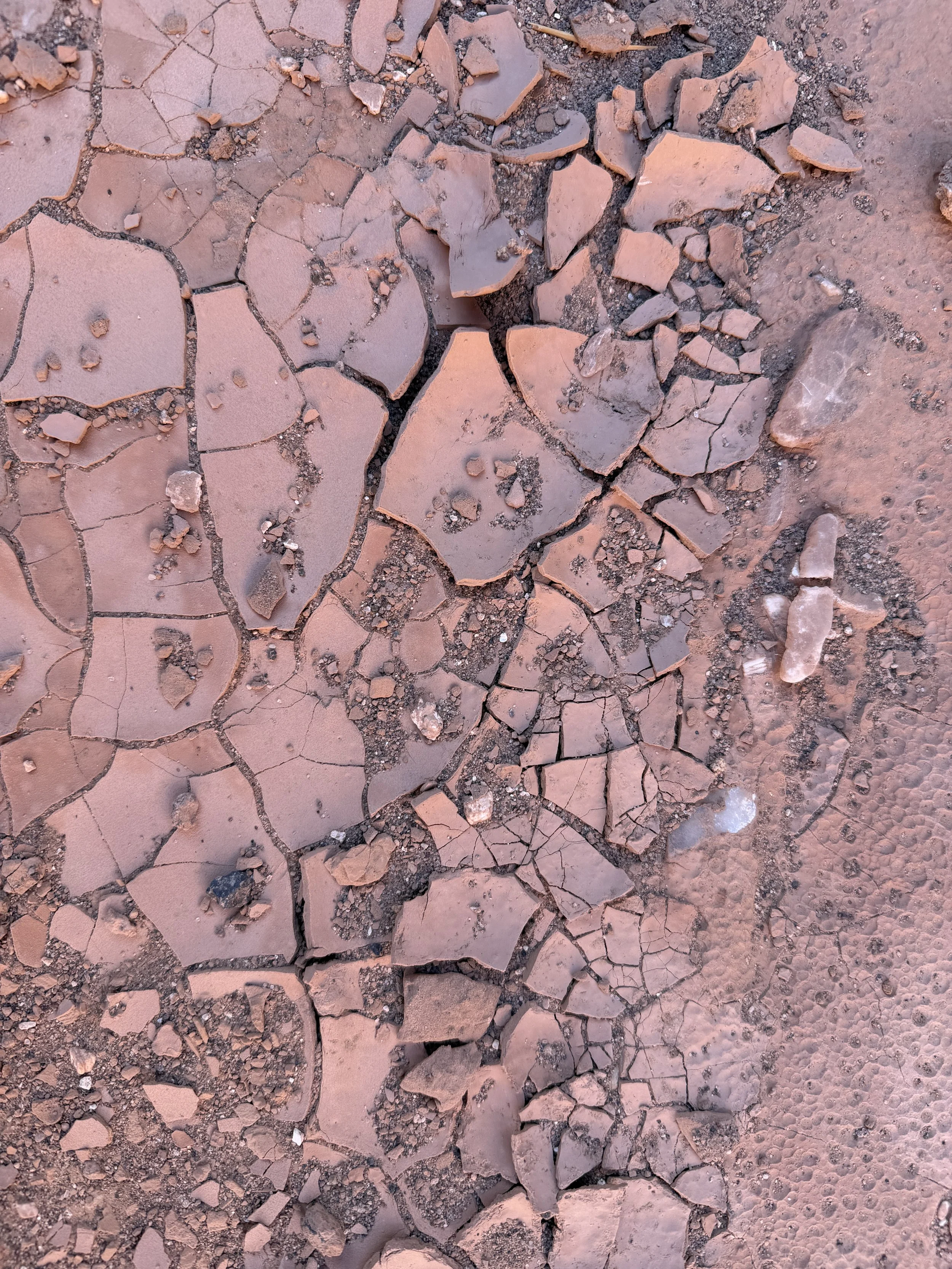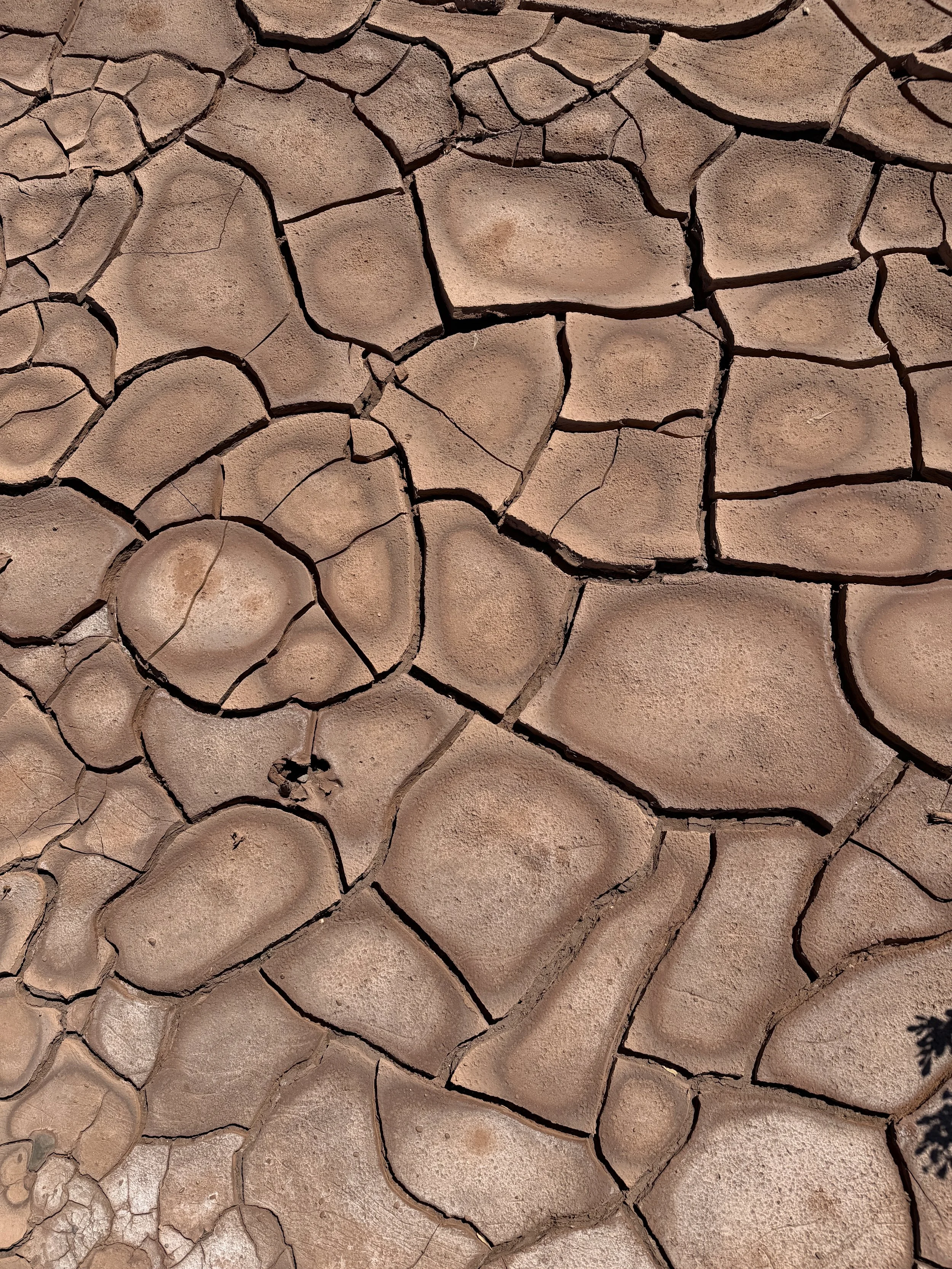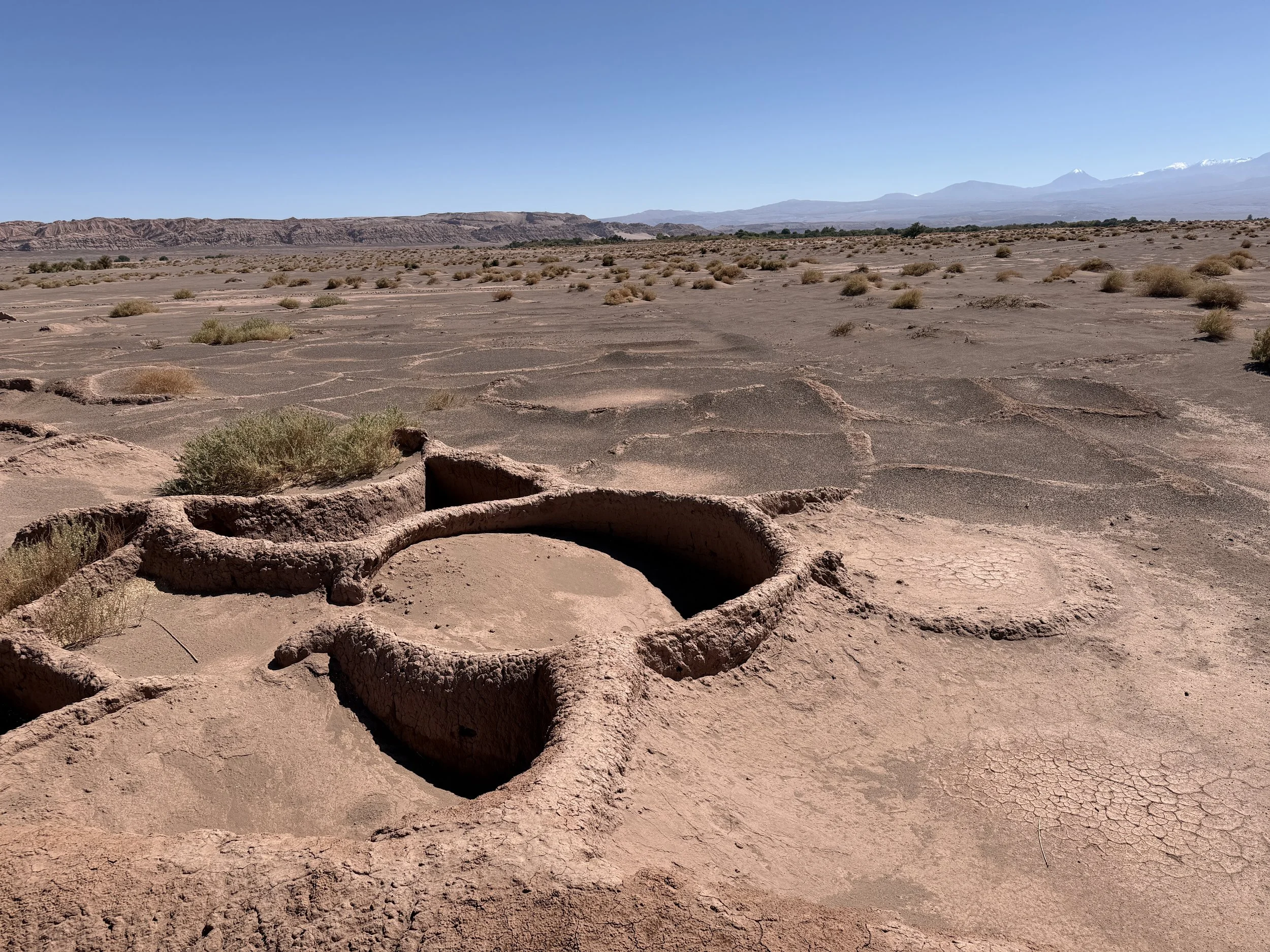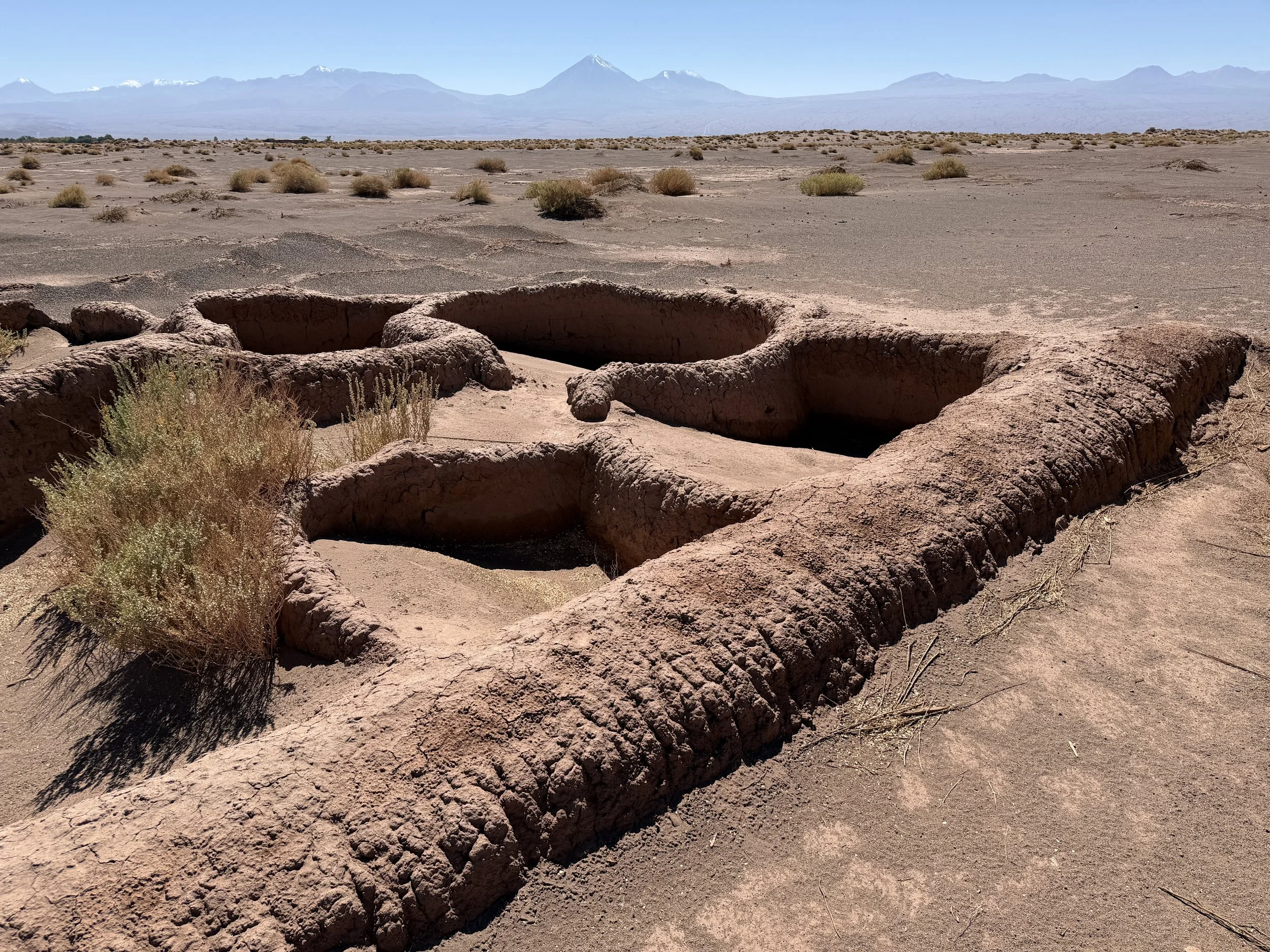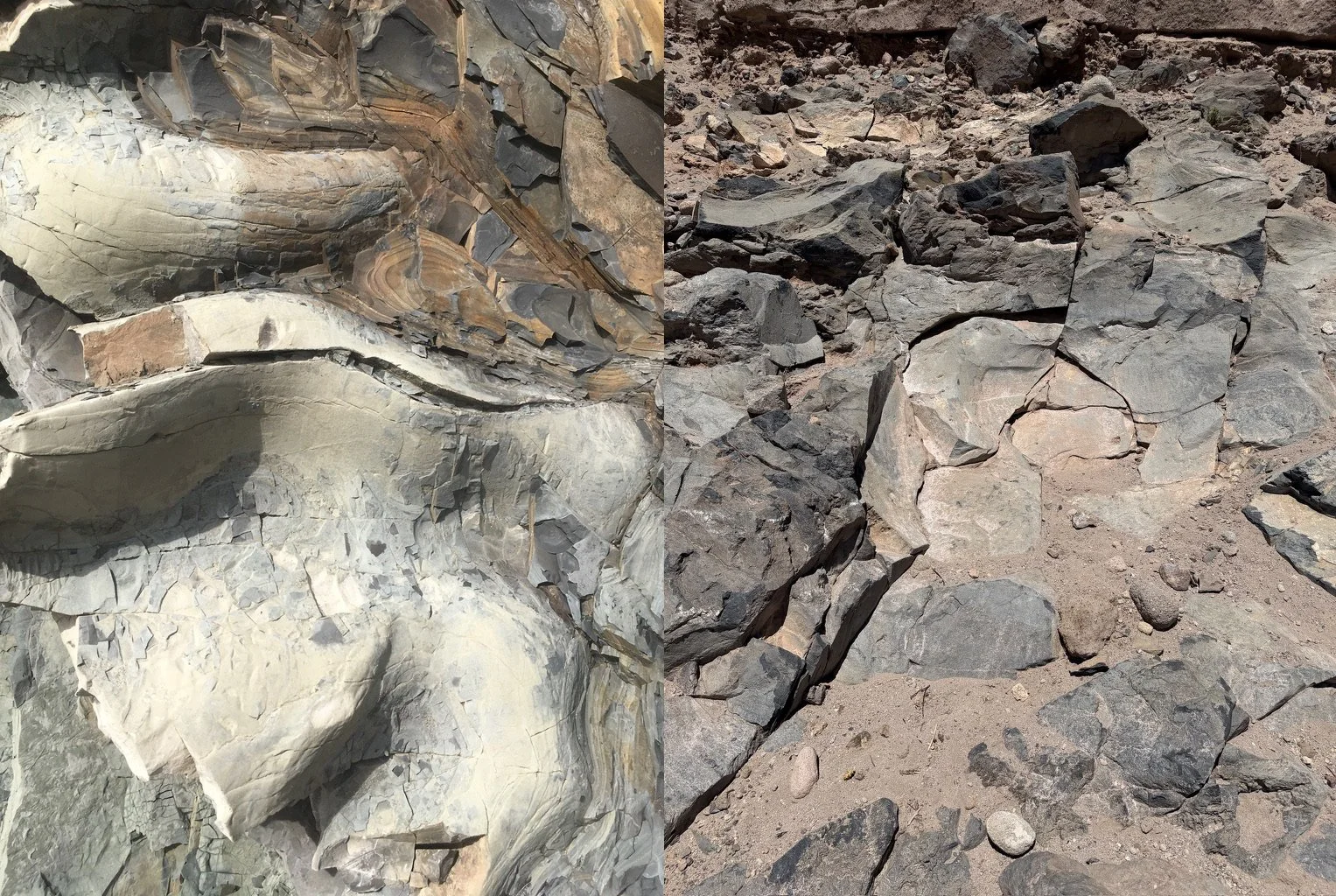
While participating in the La Wayaka artist residency in the Atacama Desert, Chile, in 2026, I found myself unable to follow my usual instinct to gather organic materials from the land. As someone not from the region, this felt ethically inappropriate, and prompted a shift in my approach. Instead, I turned to lens-based documentation, building an archive of the desert’s textures, surfaces, sky, and expansive landscapes.
Photographing became a way of marking moments of curiosity and attention, while reflecting on the histories and knowledge embedded within the region. Through the residency, I engaged with local Indigenous community members, whose insights into sustaining life in this environment revealed the depth of knowledge required to inhabit such a place. It underscored the extent to which the landscape remains inhospitable to those without this lived understanding.
This experience led me to consider questions of belonging: how and where one situates themselves within a landscape. While I identify as a Canadian Maritimer, with ancestral ties to Newfoundland, my relationship to that place is complex. I was not born there, and although my family has deep generational connections, my return to that landscape is marked by a sense of both familiarity and distance.
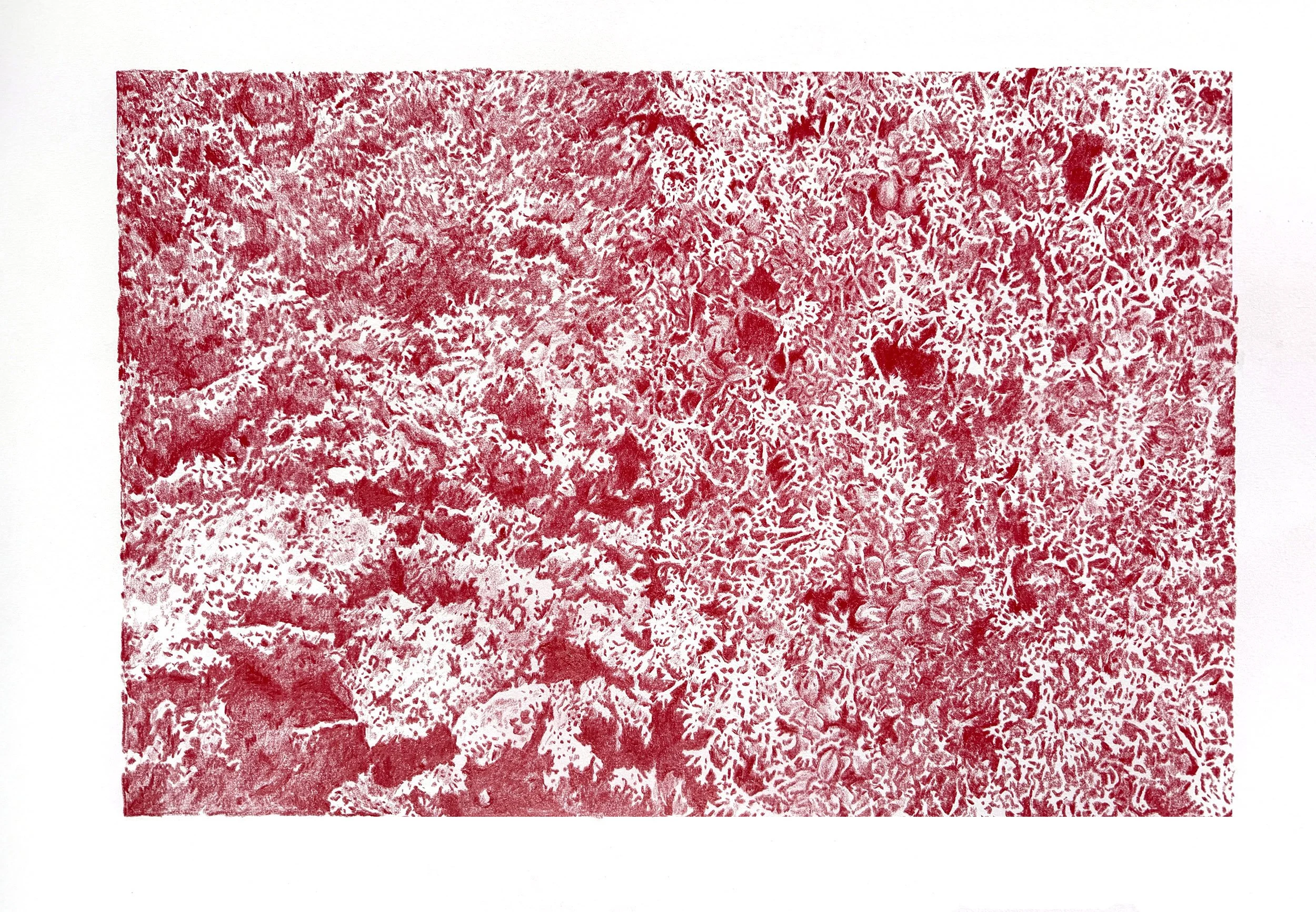
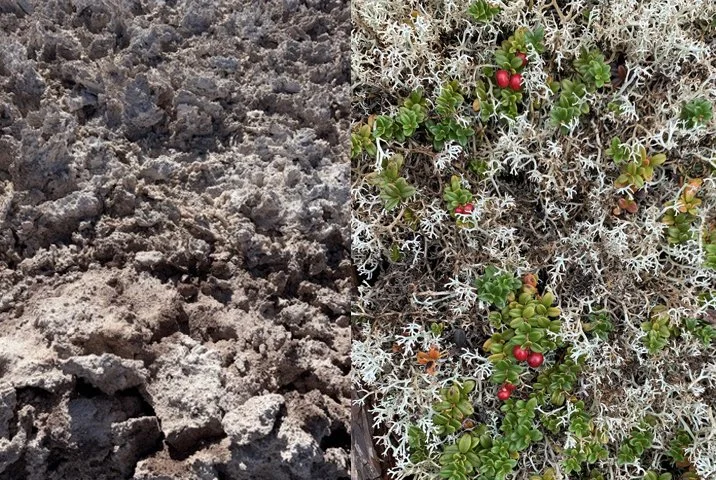
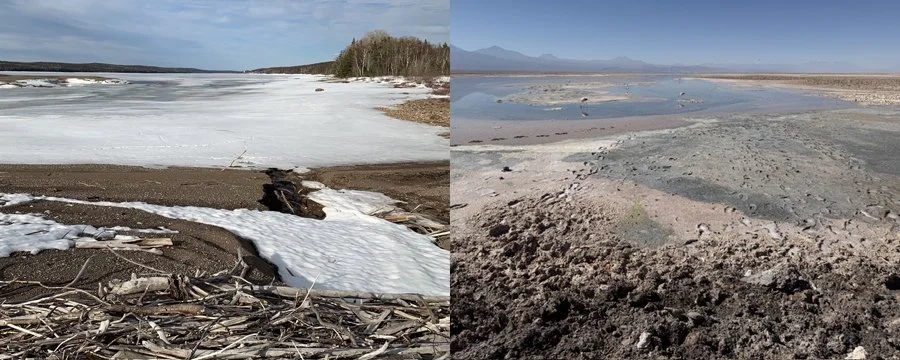
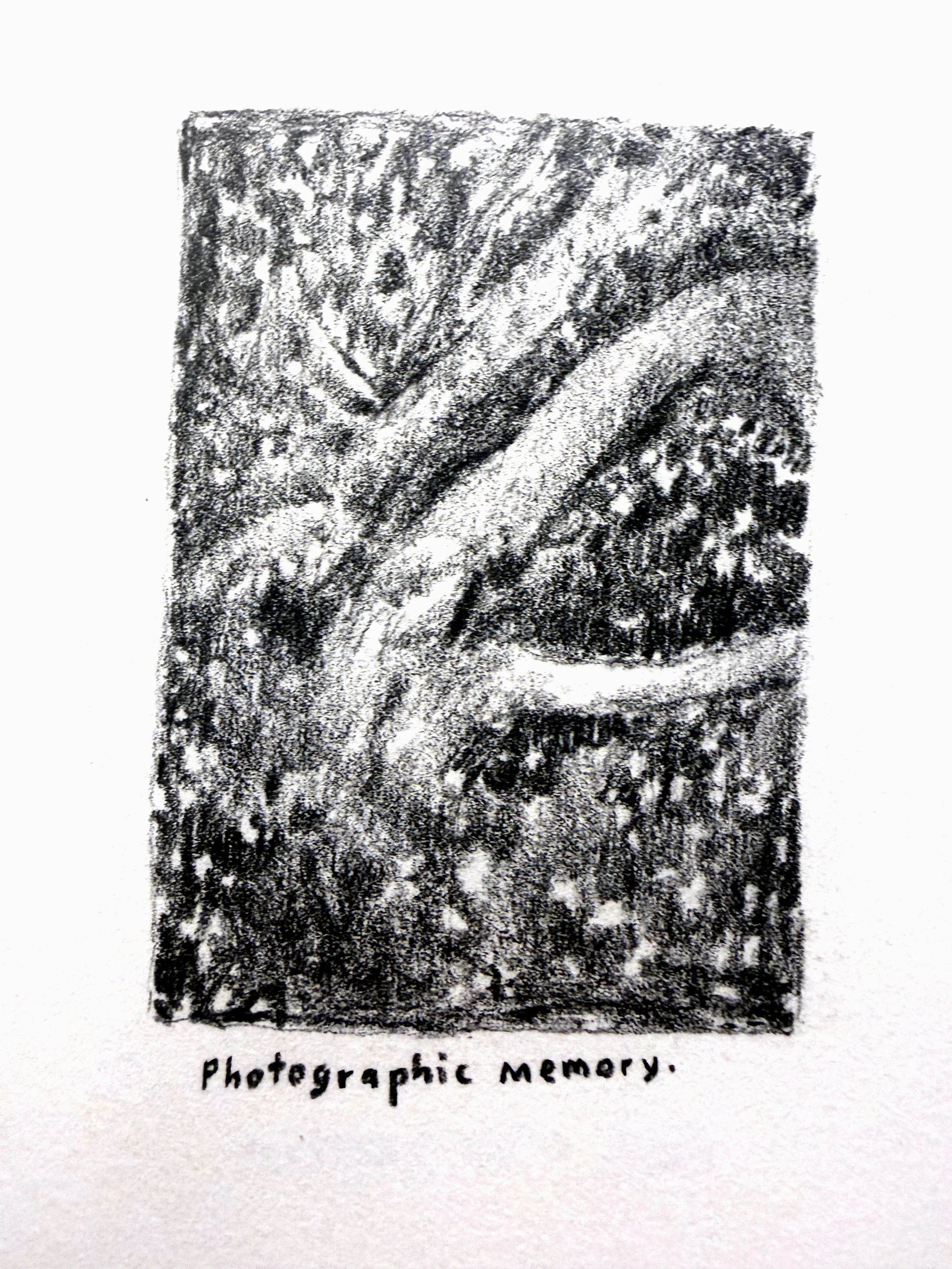
In response, I began pairing images of these two distinct environments—the arid Atacama Desert and the coastal landscapes of Newfoundland—translating them into composite drawings that merge and flatten their forms into a single tonal field. This process reflects on the instability of belonging, and the ways in which landscapes are shaped by memory, inheritance, and lived experience.
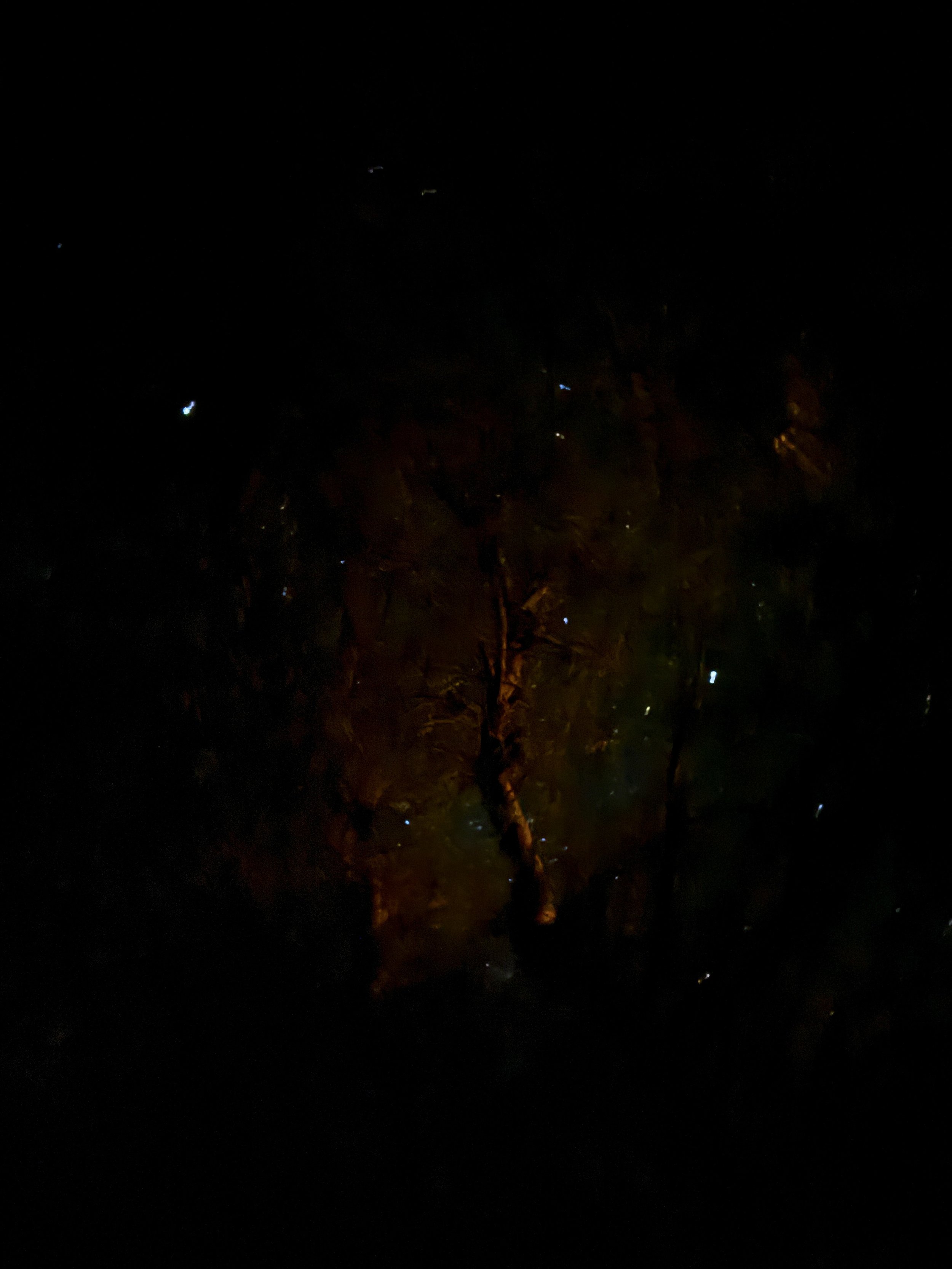
Below are works in progress, along with some additional images from the residency.